Strengthening Institutional Collaboration: KNCHR Hosts the Ethiopian Human Rights Commission
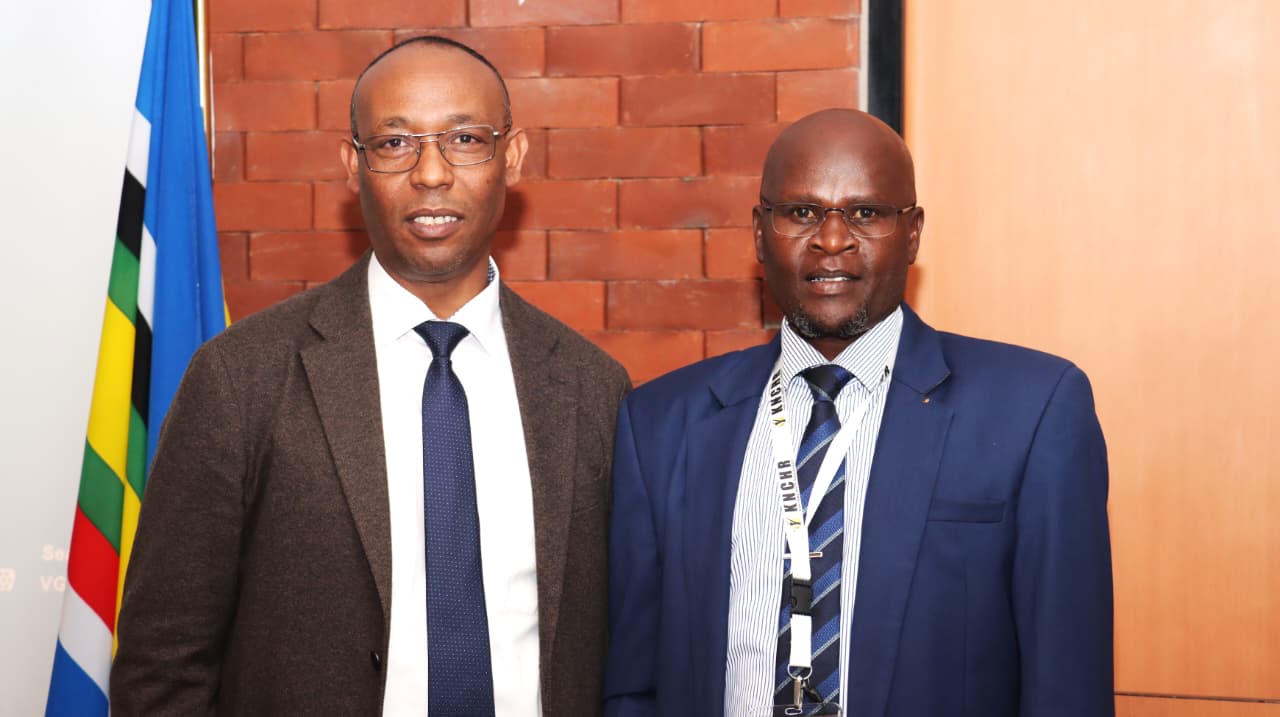
From 17th to 20th February 2026, the Kenya National Commission on Human Rights (KNCHR) hosted a high-level delegation from the Ethiopian Human Rights Commission (EHRC) at the Kimathi Board Room, KNCHR Headquarters, Nairobi.
The study visit brought together management and senior officers from both institutions for a structured knowledge-exchange programme aimed at strengthening institutional capacity, sharing best practices, and deepening regional cooperation among African National Human Rights Institutions (NHRIs).
In his opening remarks, Commissioner Dr. Wamalwa Dennis warmly welcomed the EHRC delegation to Kenya and commended the growing spirit of collaboration among African NHRIs. He emphasised that peer learning remains one of the most practical and impactful tools for institutional strengthening across the continent.
Such cooperation strengthens not only institutions but also the broader human-rights architecture across Africa.
Sharing what works
The delegation received a comprehensive introduction to KNCHR's structure and mandate, including its complaints handling and investigation processes. Discussions focused on procedural safeguards, follow-up mechanisms, and ensuring timely redress for victims.
Sessions explored Kenya's approach to Business and Human Rights (BHR), legal enforcement pathways, and judicial reforms — reflecting KNCHR's expanding role in ensuring accountability of both state and non-state actors. The EHRC delegation also engaged in discussions on KNCHR's detention monitoring framework and torture-prevention mechanisms, reinforcing the importance of oversight in safeguarding fundamental freedoms.
Technology, elections, and accountability
A significant portion of the visit was dedicated to election monitoring and early-warning systems. The KNCHR Election Monitoring System, presented by the ICT department, demonstrated how technology enhances transparency, real-time reporting, and rapid response during electoral cycles — providing practical insights into multi-stakeholder coordination in electoral governance.
KNCHR's system for tracking recommendations from the Universal Periodic Review (UPR) and other regional and international mechanisms was presented as a best practice in ensuring state accountability and implementation monitoring. The final day featured focused technical discussions on transitional justice, refugee rights, and security-sector reforms — areas that remain central to regional stability and human-rights protection.
Commissioner Dr. Wamalwa concluded by reaffirming KNCHR's openness to sustained partnerships with EHRC and other African NHRIs, noting that peer cooperation strengthens the entire continent's capacity to protect and promote human rights.